




Steam and the scent of rice bran rise from the kitchen
A morning when soft winter sunlight gently filters through gaps in the cloudy sky.
Okinawa’s winters aren’t as cold as the mainland’s, but standing in the kitchen as steam gently rises,
it feels like the season has advanced a notch, and somehow, it’s like a gentle push on my back.
Today, I decided to slowly simmer a whole daikon radish.
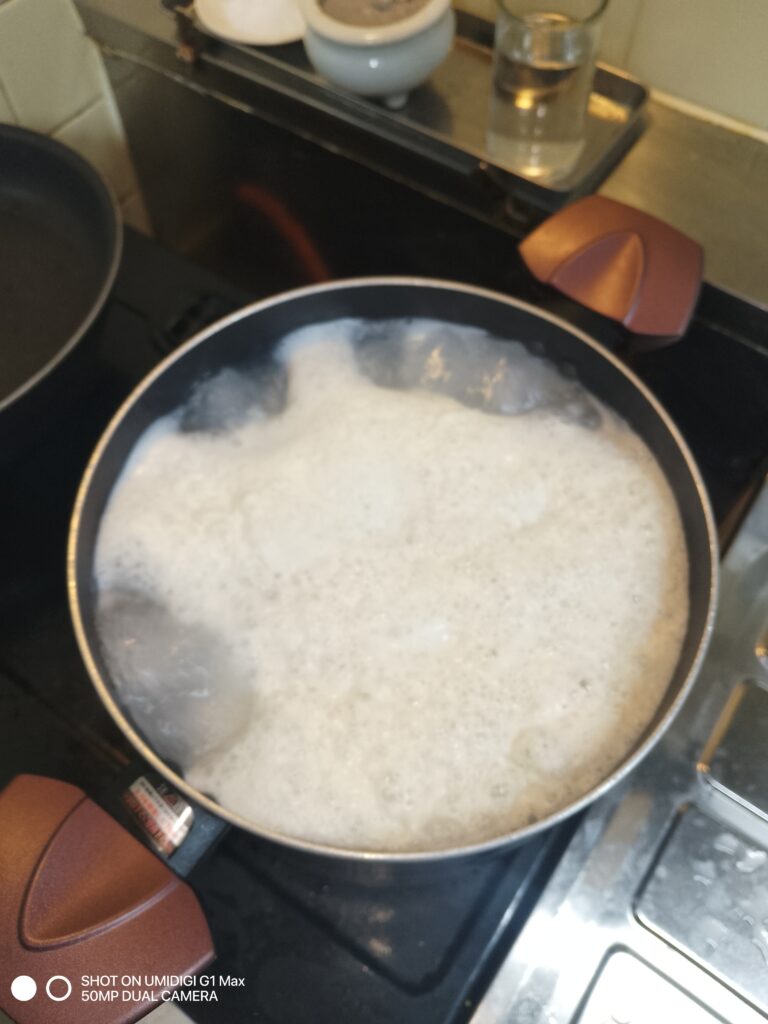
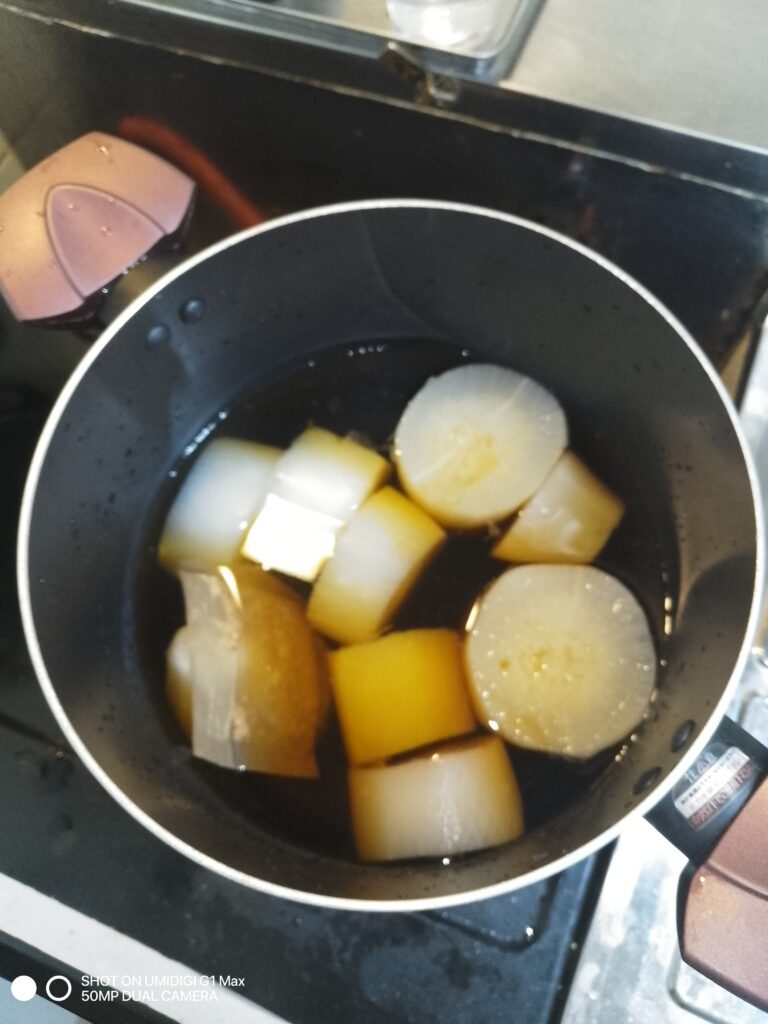
Peeled and sliced into rounds, I gently lowered them into a pot filled with rice washing water.
As I lit the stove, the scent of rice bran wafted up,
and the kitchen became enveloped in a faintly nostalgic aroma.
Blanching daikon in rice washing water is an old kitchen wisdom.
The starch and bran components in the water gently loosen the daikon’s fibers,
mellowing its bitterness while cooking it white and beautiful.
There’s a scientific reason for this, of course,
but above all, this scent seems to bring the quiet, wintery time that feels so right for the kitchen.
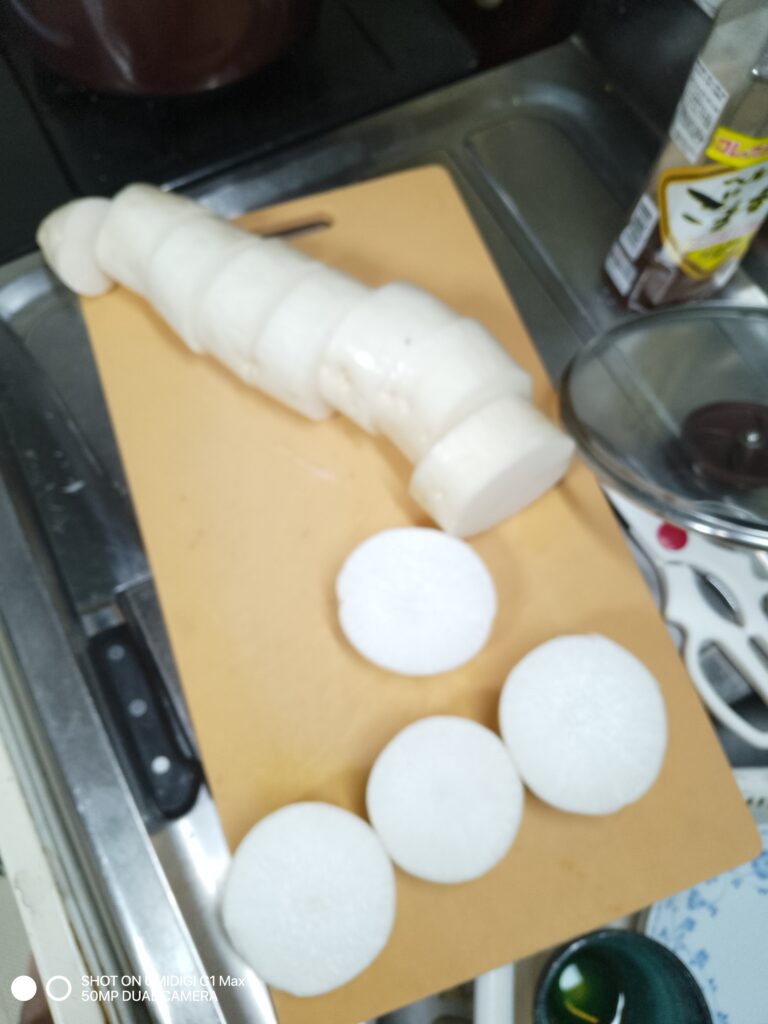
🥢Prep: Parboil daikon in rice washing water
- Cut the daikon
Slice into 2-3cm rounds. Trim the edges if desired.
(Not necessary for home cooking) - Prepare the rice washing water
When washing rice, set aside the first batch of white washing water.
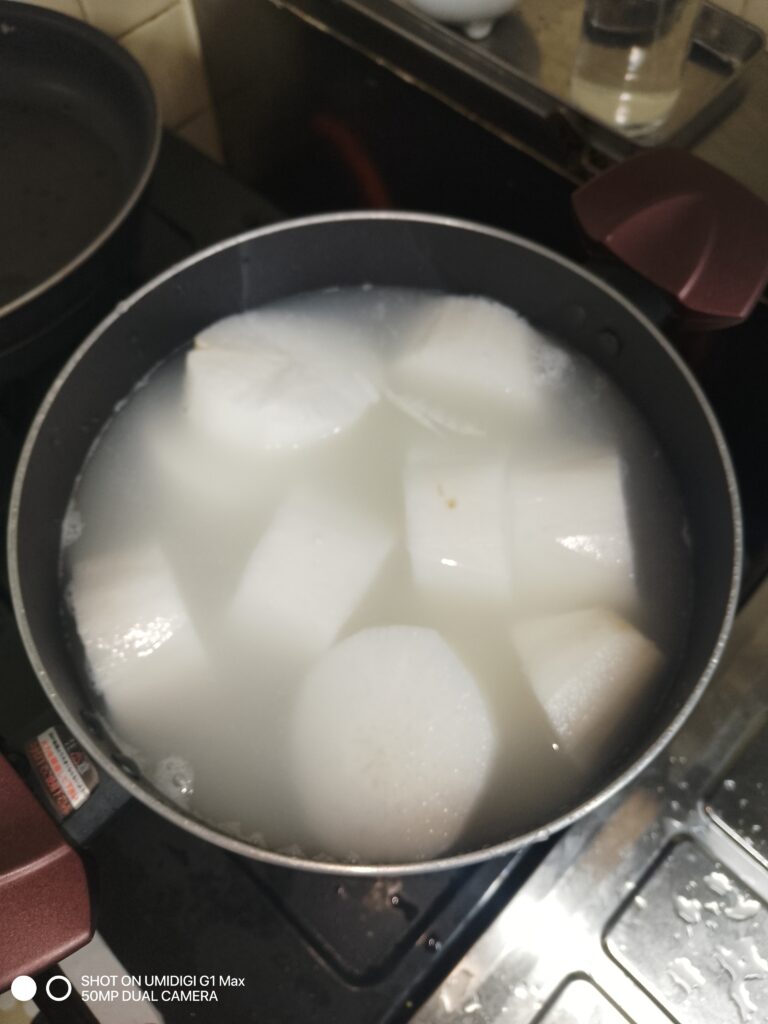
Place daikon and washing water in a pot
Add enough washing water to fully submerge the daikon and bring to medium heat. - Simmer gently
Simmer slowly for about 20-30 minutes, avoiding high heat.
Aim for the daikon edges to become slightly translucent and white. - Test with a bamboo skewer
If the skewer slides in easily, it’s done.
(It doesn’t need to be completely soft yet, as it will simmer further later.)
Rinse off the bran - Remove the parboiled daikon once, rinse off the bran aroma lightly.
Wash the pot once, then return the daikon.
If you don’t have rice washing water, it’s okay to add a little rice and cook it.
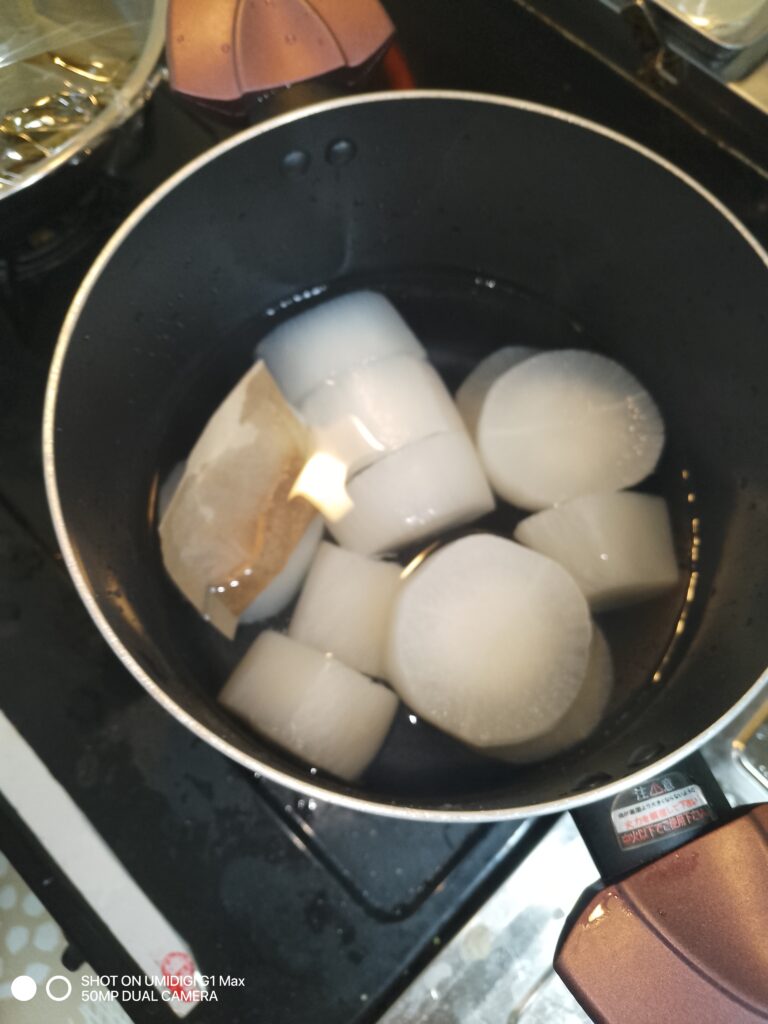
🍲 Season and simmer
- Add seasonings and dashi packs
Water (enough to half-cover the daikon)
Sake
Sugar
Light soy sauce
Soy sauce
Mirin
2 dashi packs - Simmer with a drop lid
Once boiling, reduce to low heat and simmer gently for about 1 hour.
Adjust seasoning to your household’s preference. - Turn off heat and let cool
This “cooling time” is the most crucial step.
The flavors gradually seep in as the temperature drops.
If Japanese dashi is unavailable, use broth made by simmering fish bones or beef/pork bones.
❄️ Storage and Serving
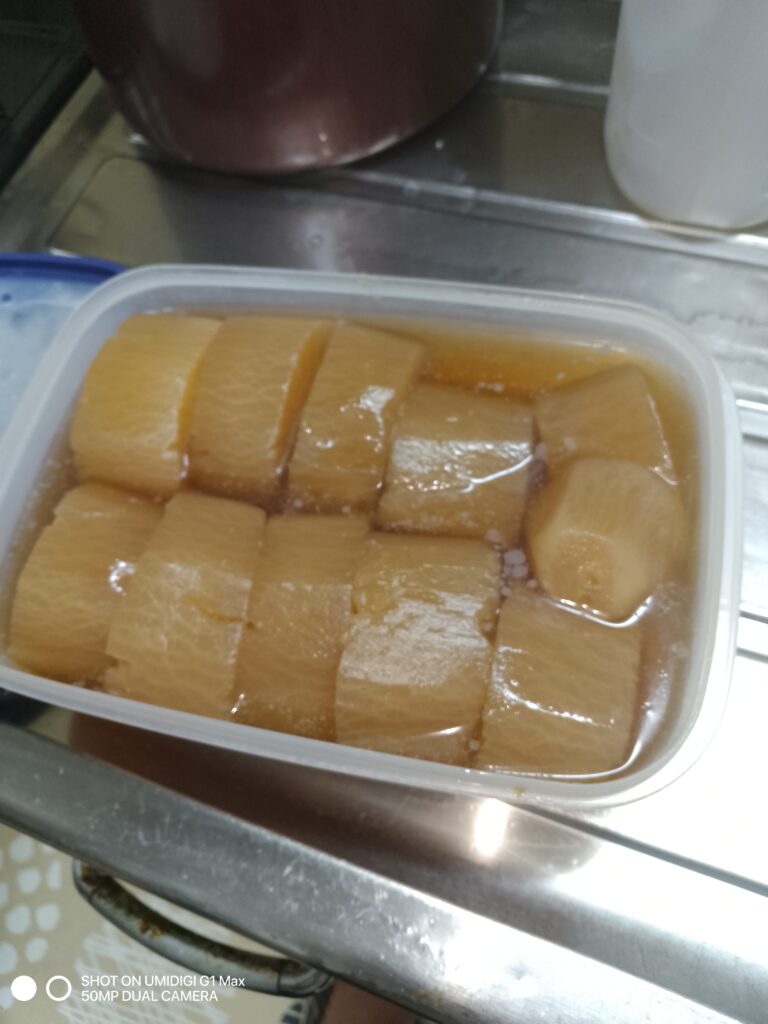
- Once cooled, transfer to a container.
- Refrigerate (best enjoyed within 2-3 days).
- Simply reheat when ready to eat.
🌿 Quiet winter kitchen craftsmanship
The kitchen, filled with rising steam and the scent of rice bran,
is a place without flashiness, yet one where the heart slowly finds its rhythm.
This time spent simmering daikon radish, too,
might be one of those quiet “handiworks” of the year-end and New Year season.


人気ブログランキング